WeRobot Home

Category

Industry Trends

24 articles

The Handoff Gap: Engineering the Moment Robots Yield Control to Humans

The Handoff Gap: Engineering the Moment Robots Yield Control to Humans

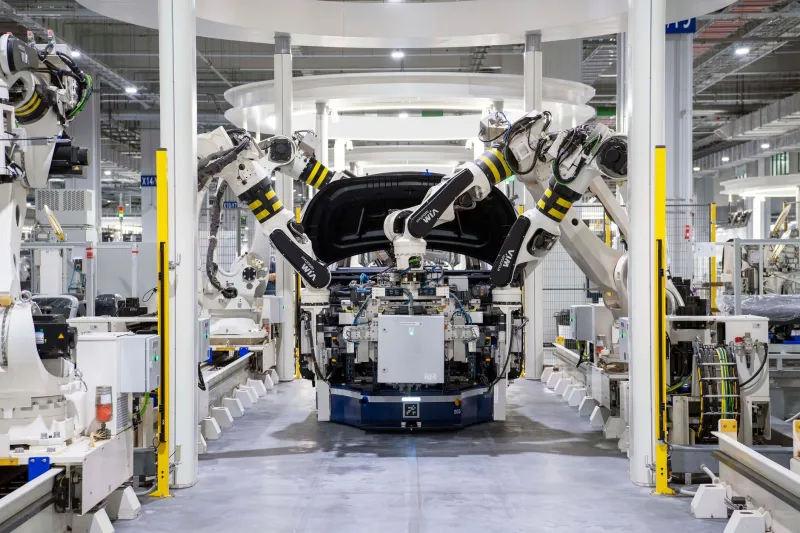
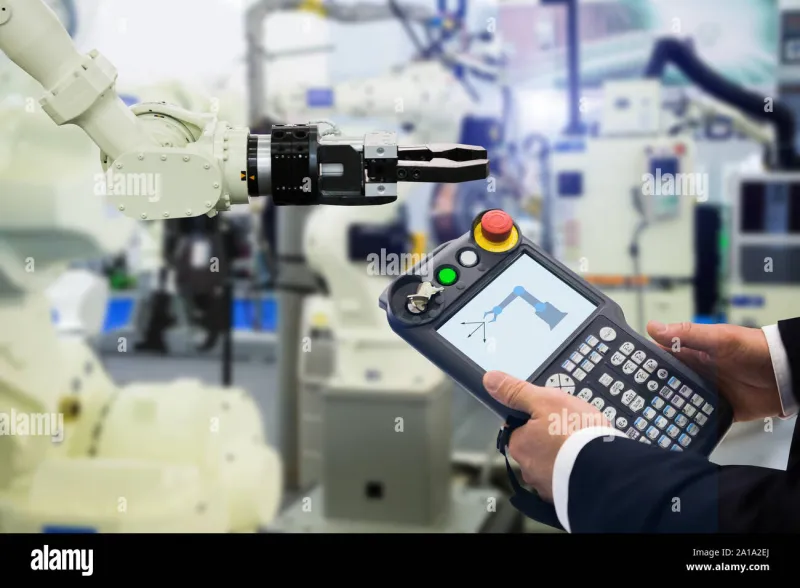
In the architecture of collaborative automation, the moment a robot transfers work to a human operator remains one of the least engineered interactions in the entire production chain. As factories and logistics facilities across the US deepen their reliance on human-robot collaboration, the quality of that transition—measured in safety, ergonomics, and throughput—is emerging as a critical differentiator.

Tolerance as Strategy: How Precision Decisions in Robotics Are Rewriting Supply Chain Economics

Tolerance as Strategy: How Precision Decisions in Robotics Are Rewriting Supply Chain Economics

The tolerance specifications written into a robotic system's design documents rarely stay on that page. They propagate outward through supply chains, procurement strategies, and maintenance budgets in ways that can dwarf the original engineering cost. A new generation of automation engineers is learning to treat tolerancing not as a technical formality but as an economic lever with system-wide consequences.

Decibels at the Door: How Acoustic Compliance Is Reshaping Industrial Robot Procurement

Decibels at the Door: How Acoustic Compliance Is Reshaping Industrial Robot Procurement

Noise and vibration thresholds are no longer afterthoughts in industrial robot deployments—they are increasingly the criteria that close or kill procurement decisions. From pharmaceutical cleanrooms to hospital logistics corridors, acoustic compliance has emerged as a genuine engineering frontier, forcing manufacturers to rethink how power, speed, and silence coexist in a single platform.

Less Is More: Why the Smartest Robots in American Factories Are Running Leaner Sensor Suites

Less Is More: Why the Smartest Robots in American Factories Are Running Leaner Sensor Suites

The robotics industry's obsession with packing more sensors onto every platform is quietly producing systems too complex to maintain, too data-heavy to act decisively, and too expensive to scale. A growing number of American manufacturers are discovering that stripping back sensor arrays—rather than expanding them—yields the reliability gains that comprehensive instrumentation promised but never delivered.

Dexterity as Destiny: How the Race to Build Smarter Grippers Is Redefining Robotic Automation

Dexterity as Destiny: How the Race to Build Smarter Grippers Is Redefining Robotic Automation

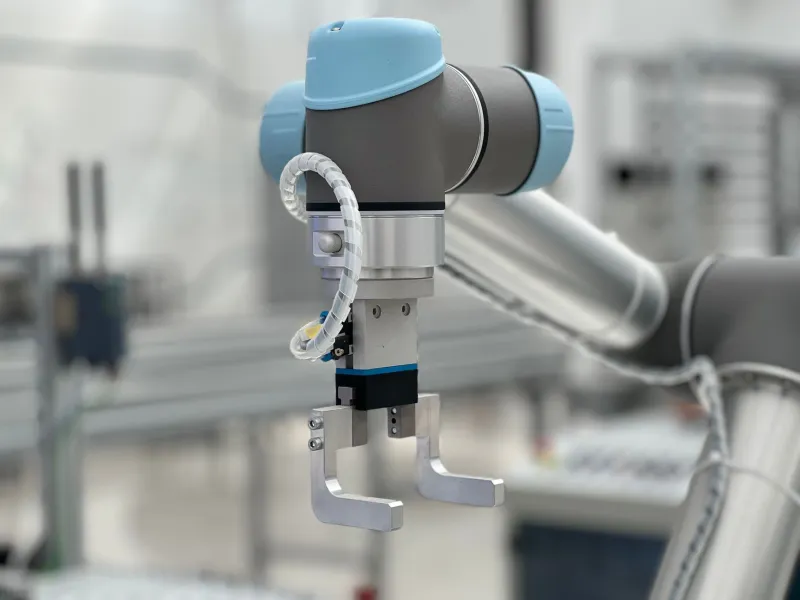
Robot grippers have quietly become the defining constraint in warehouse and manufacturing automation, with US companies pouring engineering resources into end-effectors capable of handling wildly different objects without tool changes. The engineering trade-offs between adaptability, throughput, and unit cost are forcing manufacturers to rethink what dexterity actually means at scale. Whether the next generation of cobots fulfills its promise may depend less on the arm than on what is bolted to

Silent Failures: How Network Latency Is Quietly Unraveling America's Coordinated Robot Deployments

Silent Failures: How Network Latency Is Quietly Unraveling America's Coordinated Robot Deployments

Across American factories and distribution centers, a communication crisis is undermining the promise of coordinated robotics—one dropped packet at a time. Engineers are confronting the uncomfortable reality that even milliseconds of delay can cascade into costly operational failures. The race toward edge computing and 5G offers hope, but the path to genuinely fault-tolerant robot networks remains technically treacherous.

Precision Is Overrated: How Relaxing Calibration Standards Is Making American Robots More Reliable

Precision Is Overrated: How Relaxing Calibration Standards Is Making American Robots More Reliable

Across American manufacturing floors, a counterintuitive engineering philosophy is gaining serious traction: robots perform better in the real world when engineers stop demanding theoretical perfection from their calibration routines. Leading manufacturers are discovering that loosening tolerance margins and delegating fine-tuning responsibilities to adaptive algorithms can accelerate deployment timelines and dramatically reduce maintenance overhead.

Drift and Decay: The Hidden Engineering Battle to Keep Deployed Robots Accurate

Drift and Decay: The Hidden Engineering Battle to Keep Deployed Robots Accurate

Even the most precisely calibrated industrial robot begins losing accuracy the moment it touches the factory floor. Mechanical drift, thermal expansion, and cumulative wear conspire to erode the precision that engineers labored to establish in the lab—often within a single operational shift. Understanding why this happens, and how the industry is fighting back, has become one of American manufacturing's most pressing engineering challenges.

Never Quite Perfect: The Enduring Human Role in Keeping Precision Robots on Target

Never Quite Perfect: The Enduring Human Role in Keeping Precision Robots on Target

Despite decades of advancement in robotic accuracy and machine learning, field technicians remain indispensable to maintaining the tight tolerances modern manufacturing demands. The gap between a robot's designed precision and its real-world performance drift is wider—and more consequential—than most engineers anticipate. Emerging self-calibration technologies promise relief, but the full handoff from human to machine remains elusive.

Fingers of Failure: The Stubborn Engineering Problem at the Heart of Industrial Robotics

Fingers of Failure: The Stubborn Engineering Problem at the Heart of Industrial Robotics

Across American manufacturing floors, robots capable of extraordinary precision still fumble at the most basic task: picking up an object reliably. The gripper—mechanically the simplest component in a robotic system—has proven to be one of the most consequential engineering challenges in the entire automation stack, and small manufacturers are bearing the cost.

Running on Empty: How Power System Design Is Making or Breaking Autonomous Robots

Running on Empty: How Power System Design Is Making or Breaking Autonomous Robots

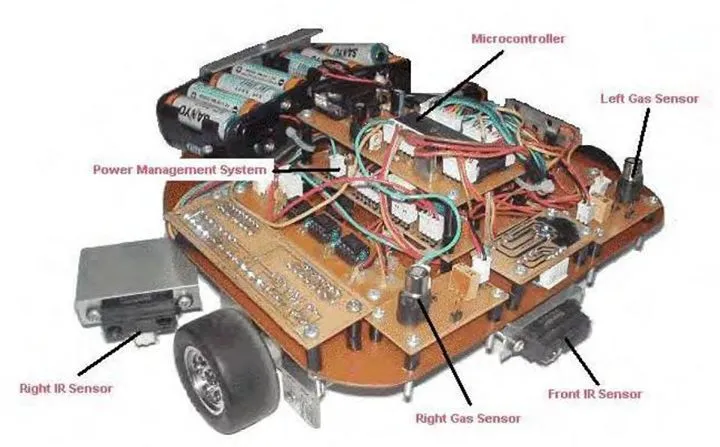
Power budget failures are quietly sabotaging some of the most technically sophisticated autonomous robots in the field today. As operational demands grow and deployment environments become more complex, engineers are confronting a fundamental truth: a robot is only as capable as the energy architecture sustaining it. This article examines why power system design has emerged as one of the most consequential—and most underestimated—challenges in modern robotics engineering.

Seeing Is Not Believing: Why Industrial Robot Vision Still Breaks Down on the Factory Floor

Seeing Is Not Believing: Why Industrial Robot Vision Still Breaks Down on the Factory Floor

Despite decades of advancement in computer vision research, robotic systems continue to stumble over visual challenges that human workers resolve instinctively. From glare on polished metal to unpredictable lighting shifts, the factory floor remains a hostile environment for machine sight—and a growing cohort of engineers is working to change that.

The Last Twelve Inches: How End-Effector Innovation Is Becoming Robotics' Most Contested Frontier

The Last Twelve Inches: How End-Effector Innovation Is Becoming Robotics' Most Contested Frontier

While the robotics industry fixates on artificial intelligence and computational horsepower, a quieter revolution is unfolding at the very tip of the robotic arm. Advances in soft robotics, adaptive gripping systems, and novel materials are finally unlocking automation in food processing, electronics assembly, and agriculture—industries long considered too unpredictable for machines. The engineers and startups driving this shift argue that the right end-effector was never a footnote; it was alwa

Heard But Not Seen: How Acoustic Engineering Is Reshaping the Cobot's Place in Human Spaces

Heard But Not Seen: How Acoustic Engineering Is Reshaping the Cobot's Place in Human Spaces

Collaborative robots are infiltrating hospitals, open-plan offices, and research labs—environments where mechanical noise is more than an annoyance, it's a genuine barrier to adoption. Engineers are now attacking the sound problem from every angle, redesigning actuators, dampening vibration at the source, and rethinking the materials that make up a robot's skeleton.

Heat Is the Enemy: How Thermal Engineering Is Unlocking Autonomous Robots for Extreme Environments

Heat Is the Enemy: How Thermal Engineering Is Unlocking Autonomous Robots for Extreme Environments

As autonomous robots push beyond the climate-controlled factory floor into deserts, Arctic tundras, and industrial furnace rooms, thermal management has emerged as one of the most consequential engineering challenges in modern robotics. Overheating is quietly disabling systems, degrading sensors, and shortening operational lifespans in ways that raw compute benchmarks never predicted. A new wave of cooling innovations is beginning to change that calculus.

From the Floor Up: How American Manufacturers Are Building Robotics Talent From Within

From the Floor Up: How American Manufacturers Are Building Robotics Talent From Within

As the demand for skilled robotics operators outpaces the supply of credentialed graduates, a growing number of mid-sized US manufacturers are turning inward—launching apprenticeships, simulation labs, and structured upskilling programs to develop the workforce automation requires. This investigation examines what those programs look like in practice, who they are serving, and which training models are genuinely producing results.

Garage Engineers: How Sub-$100 Robotics Kits Are Quietly Building America's Automation Workforce

Garage Engineers: How Sub-$100 Robotics Kits Are Quietly Building America's Automation Workforce

Affordable robotics platforms are dismantling the barriers that once confined hands-on engineering education to well-funded institutions. From kitchen tables in rural Ohio to maker spaces in South Los Angeles, a grassroots movement is equipping the next generation of automation engineers with tools, community, and purpose. The long-term implications for America's advanced manufacturing talent pipeline may be more significant than any university curriculum reform.

Closing the Loop: Addressing the Robotics Engineer Shortage Reshaping American Industry

Closing the Loop: Addressing the Robotics Engineer Shortage Reshaping American Industry

The United States is producing robotics and automation engineers at a fraction of the pace industry demands, creating a talent bottleneck that threatens to slow innovation across manufacturing, healthcare, and logistics. From community college partnerships to corporate apprenticeship programs, a new ecosystem of workforce development initiatives is beginning to take shape. This investigation examines where the pipeline is breaking down — and what engineers, educators, and employers can do to rep

Autonomous on the Move: How AI-Driven Robotics Are Rebuilding America's Warehouse Infrastructure

Autonomous on the Move: How AI-Driven Robotics Are Rebuilding America's Warehouse Infrastructure

Across the United States, distribution centers are deploying fleets of AI-powered autonomous mobile robots to combat persistent labor shortages and operational inefficiencies. From cold-storage facilities in the Midwest to last-mile hubs on the East Coast, this technological transformation is redefining what American logistics looks like — and what it demands from its workforce.

Cobots on the Clock: How American Factories Are Rethinking the Human-Machine Partnership

Cobots on the Clock: How American Factories Are Rethinking the Human-Machine Partnership

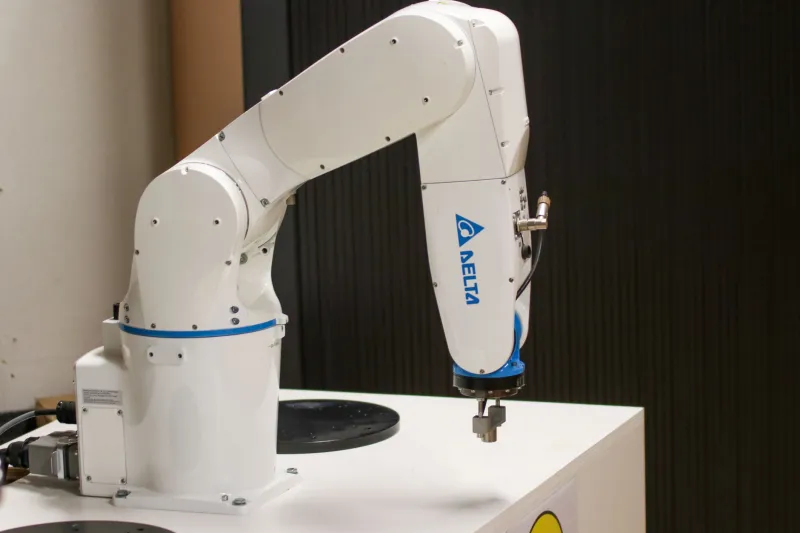
Collaborative robots are no longer a futuristic concept reserved for Silicon Valley pilot programs—they are actively reshaping production floors from Detroit to Dallas. Yet despite mounting evidence of their value, US manufacturers are still trailing their counterparts in Germany, Japan, and South Korea in adoption rates. Understanding why that gap exists—and how to close it—may define the next decade of American industrial competitiveness.